Gender Diversity fair in Madurai

Kalki Subramaniam
Gender activist John
Kalki Subramaniam & Gender activist John  with the principal & the vice principal

Gender and sexuality issues has been widely discussed in recent times, since thedecriminalization of IPC 377, The rising consciousness of gender and sexuality isan indicator of the rising importance of gender and sexuality issues. The American college located in Madurai is a pioneer in raising the need of awareness for gender and sexuality issues. The Department of Religion-Philosophy and Sociology -... "REPHISO" conducted India's first Gender Diversity Fair a seminar cum interactive session on March, 29th on gender and sexuality diversity issues. It will be ofits first kind in India, to discuss the genders apart from men, women and transwomen to include the issues of other 20 genders like transmen, pangender, agender,androgyny, genderfluid, crossdressers,bigender,trigender,neutrois,epicene,demigirl and demiguy, girlfags and guydykes and numerous other gender varieties and even the other diversities of sexuality including pansexuals, asexual, polysexuals etc which are even unaware within the mainstream LGBTQ community itself.The seminar stressed on various issues of the diverse people of gender identity and sexual identity in sociological, philosophical, scientific and religious views.

The Principal & Secretary of the American College inaugurated the fair & delivered welcome address he said " The government, educationists and social activists should put an effort together and the change should start from the education system.” he insists that gender and sexuality education should be part of the main syllabus in high school and college. “People are ignorant about the existence of various genders and sexuality,” he says. “And due to this, for over a century, queer community have undergone a lot of ill-treatment and abuse.”

Students & faculties during the seminar
more than 300 students attented the interactive session on Gender Diversity
 The mainsession was conducted by the renowned transgender activist, Kalki Subramaniam, founder of Sahodari, a organization dedicatedfor the issues of transgenders. She had conducted more than 80 seminars inforeign and national universities on gender issues. Moreover she was therepresentative of the United Nations program on gender issues from India. IVLPguest for United States from India, she is an actress, writer, speaker too  she says “All we want is love, respect and dignity but when it is not given to us we tend to become rebels.” Being a member of the community she advocates for, Kalki herself faced social discrimination and abuse, yet she has gone past it. She acted in the art film “Narthagi”, and she proudly announced her next project. “I have signed up for a Malayalam commercial film for the female lead role.” A transgender woman acting in a mainstream film is a positive sign, but Kalki's expedition doesn't stop here. There are still many misconceptions about LGBT people, she said. “Our objective is to change the view and notions of the society, We aim to build a world based on equality, reciprocity, and interdependence, where people are free to express their sexuality as part of their broader human rights. Towards this aim, we advocate for policy change around issues of gender and sexuality, create spaces for people to begin to talk and think critically about the politics of gender and sexuality, and build links with other social movements. We work through active, teachers, parents, workers- who empower themselves and each other through dialogue and sharing.


&  John Marshal,Director Srishti Madurai, Coimbatore, a organization dedicated for the LGBTQ issues had presented second session on diversities of gender started the session with a question "Do you know that there are nearly 20 different types of genders other than male and female? Gender activist John, explained. “Generally the terms gender, sexuality and sex are taken to be the same. But they all mean different things,” he says. “Sex is a biological definition and gender is the self identity and also the sociocultural and behavioral perception, while sexuality refers to the sexual attraction towards a particular sex.”

Referring to various indications of alternative sexuality in the scriptures, he said, “Alternative gender or sexuality is not unnatural. It's very much natural like the usual man and woman genders and heterosexuality.” that even within the mainstream LGBT community, the existence of these many genders is largely unknown. “Some forms of genders don't even have a proper word in the dictionary and we have coined terms both in Tamil and English for a few,”.


Prof. Dr. J. Aruldoss, Vice-Principal & Head of the Department of Religion, Philosophy & Sociology delivered vote of thanks & ended the fair he thanked Kalki & John " he said" Well, India is said to be a country of rich diversity and we learn that Indians are proud of “unity in diversity”. But where this “unity in diversity “shrinks out, when come to the discussion of sexuality and gender? Why we are still reluctant to accept the wide diversity in sexuality and gender and celebrate those identities?

Think what happens if people who possessing wider diversity of sexual and gender orientation are compelled to hide their true identity and allowed to marry a person who not suits for them? so respect everyone as human. he enkindleth students towards to do research on such tasks to bring a social change.

FALSE CLAIM ON SRISHTI TEAM

DEAR FRIENDS SRISHTI TEAM IS REPORTED WITH A FALSE CLAIM OF HAVING CONDUCTED A STUDY ON PR, WHICH IS AGAINST THE PRIVACY..LET YOU READ THE MAIL AS FOLLOWS:
232. sexymatured 09. Mar. 2012 - 10:05

Greetings from Srishti, Madurai.

We are an advocacy group conducting study and awareness on LGBT issues in South India. This study focuses on the issues related to people who are non-south Indians living in Bangalore, Chennai, Hyderabad and Madurai. We are finishing our online research tomorrow.

For obvious reasons, we don’t reveal our purpose of communication and discussion at the introduction. Our previous experiences say that in such case people don’t open up freely, especially on issues related to sex.

We always do extensive background research before we contact some one. So, we did it for you, both in Facebook and in PR. We found your profile interesting and hence we contacted you. We also contacted some people who are linked to your profile. They either know you or met you in some point of time.

We are not supposed to reveal any information to you or any other. This is only for our own study and awareness generation.

We are supposed to contact at least 10 people for each profile to get to know about them. In your case, due to time constraint, we contacted only seven people from your friend list. Six people described you as purely sexual (like you are horny, you have a great dick, etc) and only one guy described you as a very nice human being. He seems to care for you a lot.

And also, the face picture was a fake one. This is one of our workers from Madurai, who is a straight guy. And the body pictures are from one of your friends whom you have not tried for sex still. He is from outside south India. WE can’t reveal whose pictures are these and how did we get it. May be you meet him someday and find yourself. So, you know by now that the face and body are not of the same person.

All the best for your love and life.

Always practice safe sex.

Thanks for your views regarding life and sex. "

BUT IN REAL WE HAVENT CONDUCTED SUCH A RESEARCH ..

Dear Friends,

Srishti is a resource center focused only on non metro cities in
tamilnadu like coimbatore and madurai and the mail claimed to be from
srishti here is really beyond our scope of coverage of non-metro
cities. This itself shows the falseness of the report.

We haven't initiated studies on contemporary issues like listed in the
report, rather we focus only on the historical aspects of LGBTQ
community.

The report generated here is false as the official srishti page in
planetromeo was deactivated earlier itself. Moreover only one of our
team members, john is in planetromeo and there wasn't any such
initiative from the side of john. And if there were any such research
we would have posted it in our official page and please check the
srishti madurai,srishti coimbatore and srishti genderqueer pages that,
there wasn't any such post.
http://www.facebook.com/pages/Srishti-coimbatore/295379053847875
http://www.facebook.com/pages/Srishti-GQGenderqueer/207256849369144
http://www.facebook.com/pages/Srishti-madurai/247701051939988

Such a fake message questions our privacy and dignity and such a
misuse in the name of our srishti team is unbearable at any cost. We
have got our own reputation in dailies and this fake message seems an
attempt to collapse our own name. Such kind of activities are highly
condemned by srishti team and those kind of fake reports hurdles our
objective of working for LGBTQ community.

Thank You
Regards
Sarva Punyan (Founder,Srishti)
Senthil Kumaran( Co-Founder,Srishti)
John(Director, Srishti team)

Press notes

                           News article on Srishti Madurai Group in Facebook on The Times of India

Interview of Gopi Shankar & John about the forthcoming Tamil queer book

HOMOSEXUALITY-? WHAT IS NATURAL? WHAT IS UNNATURAL? - Jacques John Joanna (Psicoanalisist)


“Many highly respectable individuals of ancient and modern times have been homosexuals, several of the greatest men among them. (Plato, Michelangelo, Leonardo da Vinci, etc). It is a great injustice to persecute homosexuality as a crime –and a cruelty, too.” -Sigmund Freud, Psychoanalyst.


Well. Again and again the words “gay sex is against nature” is constantly diffusing. But what is against nature? Gay sex or the call to ban gay sex, as it is unnatural?


Science can have well definite answers for this. But the findings of science strongly suggest gay sex is not at all unnatural. Homosexuality is found in nature. Well documented in 500 species and observed in 1500 species apart from human species, exclusive homosexuality occurs in the species Ovis Aries apart from human species. So, now say, which assumption is against nature? Accepting homosexuality as natural or accepting it as unnatural? Some people who might have lack of scientific knowledge on this issue may select the second choice..!!!

Some people still accepting the fact that homosexuality occurs in nature, still denies the acceptance of the homosexuality be means of the argument, “if gay sex were accepted then sex with animals will be also subjected to acceptance”. 

 Well, is this means whether two men or two women who wish to have a consented sex between them switches to the level of animals in this case? Is this is what the logic that justifies the homophobic comment of comparing animal sex to gay sex? Well, whether the animal can give consent? 

So people who follow this line of idea against homosexuality, thinks that people who wish to have a consented sex who belongs to the same gender is always a matter of abuse? Whether people turn speechless creatures non capable of giving a consent when coming to gay sex? Well, we have to think over it..!!!


Really, it is exclamatory when some people comment that homosexual relationships are against the social order and calling it immoral. Okay..!!! If it is so, are they ready to prove that homosexuality collapsed the order of societies which had appreciated the homosexual relationships? 


Whether Plato and Socrates, who came from a Greek society, where homosexual relationships are seen as normal, gave ideas which are against the social order? Or, well the great Alexander collapsed the order of society in which he was raised? Well, those who say homosexuals are against the social order, can you please think about the contributions of homosexuals, which had a great effect in society? Leanardo-da-vinci, whose paintings are still admired and Michelangelo, whose sculptures are still considered very artistic piece, Alan Turning, who was the first one who had introduced the concept of “algorithm” in computer science etc, were the people who were against the social order?  Whether their contributions played the role of against society? Are they immoral people? Well, this comment on homosexuals is unbearable..!!!

Some people still say that AIDS is spread by homosexuality. Risk for transmitting HIV through unprotected anal intercourse is greater than the risk from vaginal intercourse or oral sex.  

but this fact never denies that HIV is caused by vaginal intercourse also. And not at all sex in homosexuality is anal sex. Moreover the AIDS is transmitted only by unprotected sex. Do, the opponents of homosexuality think that gay sex is unprotected sex? So, what is the assumption they are using to justify that HIV is spread by gay sex. HIV is spread by any sex, any unprotected sex. Whether they think that it is unable to use condoms in gay sex and calling it unprotected one? But, if we are attributing 

homosexuality with the spread of AIDS, does it mean that the patients who are affected with AIDS are homosexuals or they had sex? Still, the opponents are ready to ensure that only vaginal sex occurs in heterosexuality? Don’t they know the anal intercourse or oral intercourse occurring between heterosexual partners? Well, in the country of India, where homosexuality is considered unnatural and a public statement is made that it is immoral, several thousands of years ago, the book written from here, the Kamasutra, discuss widely on other than the vaginal intercourse, even between males…!! Does this mean that homosexuality is a western “disease”? No.!! If it is the opponents claiming that Kamasutra is a western book? No, east has the long tradition of accepting the homosexual relationships. So, whether AIDS is spread by gay sex or unprotected sex?

Well, the diversity of gender and sexual orientation is well documented even in literature and in case of Vedas too! The erotic depictions of homosexuality can be still found in khajuraho temples. Rig Veda says “vikruti evam prakurti” (“what seems unnatural is also natural”). So, following a Vedic line of thought can opponents justify that homosexuality is against nature? India is one of the countries which had accepted the variations of gender and sexuality. Even the separate sects for transgender called hijira, the aravan cult of Tamilnadu etc are some of the best examples. 

Gender and sexual ambiguity was well documented and recorded in the history of India. So, how can one justify the fact that homosexuality is a western disease? Homoerotic themes are wide spread across the mythology of Hindu religion. Only after the advent of the Abrahamic religions, homosexuality was condemned and made unnatural in the rule of British. Freud says every being posses Latent Homosexual tendency MSM (Men Sex with Men) and WSW (Women Sex with Women) all MSM are not gays and all WSW are not Lesbians. Gay & Lesbian relationship have to do a lot with the Mutual understanding more than sex so a person will not become gay or lesbian after having sex with the person of same gender.


The main point, what we wish to indicate here is the educational system, which preaches that there are only two genders and single sexuality-the heterosexuality. But there are more than 25 types of genders with more than 12  types of sexual attraction and gender ambiguous people are recorded well, like transgender(people who feels that the gender assigned them by means of society based on reproductive organs is not applicable for them and follow a different one or combination of others), transsexuals(people who feel that their biological sex assigned at birth ahs to be changed), intersex(people having ambiguous genitalia or physical characteristics), androgynous (people who feel never gender or consider themselves neither male nor female), trigenders(who moves between male, female and third genders), gender fluids(who don’t have a constant gender perception of themselves),bigender(who considers that they are both male and female), gender nonconformists, agenders(who rejects the gender roles), gays(men attracted to men), lesbians(women attracted to women), bisexuals(attracted to both men and women), polysexuals(attracted to more than two genders), pansexual(attracted to all  irrespective of biological sex,gender and sexual orientation),asexual(who do no feel sexual attraction to any one),guydykes and girlfags(straight men and straight women who are attracted more to bisexual/lesbian women or bisexual/gay men respectively) etc and several other categories . Such a wide and vast categories of sexuality and gender exists, still the educational system propagates that there exists the two genders and one sexuality..!!

Well, India is said to be a country of rich diversity and we learn that Indians are proud of “unity in diversity”. But where this “unity in diversity “shrinks out, when come to the discussion of sexuality and gender? Why we are still reluctant to accept the wide diversity in sexuality and gender and celebrate those identities?


Think what happens if people who possessing wider diversity of sexual and gender orientation are compelled to hide their true identity and allowed to marry a person who not suits for them? For example, think the “sweetness” of marriage life one experience, if a gay person, who finds love and attachment with another male, is compelled to marry a straight girl? Please think a while..!!!

Finally please read the response to a mother who asked Sigmund Freud, one of the great psychologists of this century regarding “curing” her homosexual son.

“I gather from your letter that your son is a homosexual. I am most impressed by the fact that you do not mention this term yourself in your information about him. May I question you why you avoid it? Homosexuality is assuredly no advantage, but it is nothing to be ashamed of, no vice, no degradation; it cannot be classified as an illness; we consider it to be a variation of the sexual function, produced by a certain arrest of sexual development. Many highly respectable individuals of ancient and modern times have been homosexuals, several of the greatest men among them. (Plato, Michelangelo, Leonardo da Vinci, etc). It is a great injustice to persecute homosexuality as a crime –and a cruelty, too. If you do not believe me, read the books of Havelock Ellis.”


Hindu view of LGBT © Srishti Madurai.

Hindu views of homosexuality and, in general, LGBT (lesbian, gay, bisexual, and transgender) issues, are diverse. Homosexuality is regarded as one of the possible expressions of human desire and Hindu mythic stories have portrayed homosexual experience as natural and joyful. There are several Hindu temples which have carvings that depict both men and women indulging in homosexual sex.
Same-sex relations and gender variance have been represented within Hinduism from Vedic times through to the present day, in rituals, law books, religious or so-called mythical narratives, commentaries, paintings, and sculpture.
The extent to which these representations embrace or reject homosexuality has been disputed within the religion as well as outside of it. In 2009,
The United Kingdom Hindu Council issued a statement that 'Hinduism does not condemn homosexuality', subsequent to the decision of the Delhi High Court to legalise homosexuality in India.


Difference between Western LGBT view and Hindu view of male sexuality

Unlike the West, the Hindu society does not have the concept of 'sexual orientation' that classifies males on the basis of who they desire.

However, there is a strong, ancient concept of third gender which is for individuals who have strong elements of both male and female in them.
Third genders include males with a predominant feminine soul or gender orientation. These males are not classified as men. Only non-feminine gendered males are classified as 'men.'

The Hindu society, since the ancient times, does not consider the men's desire or sexual activity with men, the same as that of a third gender's desire or sexual activity with men.
Although, the society, formally does not acknowledge sexuality between men, it formally acknowledges and gives space to sexuality between men and third genders as a variation of male-female sex
(i.e., a part of heterosexuality, rather than homosexuality, if analysed in western terms).

In fact, Hijras, Alis, Kotis, etc. -- the various forms of third gender that exist in India today, all are characterized by the gender role of having receptive anal and oral sex with men. Sexuality between men (as distinct from third genders) have nevertheless thrived, mostly unspoken, informally, within men's spaces, without being seen as 'different' in the way its seen in the West.
 Like in other non-western cultures,  it is considered more or less, a universal aspect of manhood, even if not socially desirable. Its the effeminate male sexuality for men (or for women) which is seen as 'different,' and differently categorised.


Men often refer to their sexual play with each other as 'Masti.'
Western concept of Homosexuality seeks to break this distinction between third gender and men, and to isolate sexuality between men along with the third genders, with all its negative consequences.
 As such, men in India have long resisted the concept of 'gay,' and have sex with men without identifying as a 'homosexual.'

Gay activists, have sought to introduce a locally acceptable term for 'homosexual' for two decades, without success. Finally, the term MSM was taken, because it was technically difficult for men to avoid, if they had sex with men. However, it too was rejected by Indian men, as if was seen as just another term for 'gay.'

In the past few years, however, the concept of 'homosexuality' has finally taken root, as men's spaces have weakened because of Westernization and gay groups becoming strong with years of gay and AIDS activism.
A significant fallout of this has been that sexual desire between men, which was near universal earlier, is now become more and more isolated from the mainstream, as men are distancing themselves from it because of the stigma of effeminacy or third gender attached to the notion of 'gay.'
Things have become so bad in some westernized urban spaces, that two men can no longer hold hands—something which was a common sight in India, not too far back.

Contemporary Hindu society

Sexuality is rarely discussed openly in contemporary Hindu society, especially in modern India where homosexuality was illegal until 2009, due to colonial British laws.


On July 2, 2009 The Delhi High Court in a historic judgement decriminalised homosexuality in India; where the court noted that the existing laws violated fundamental rights to personal liberty (Article 21 of the Indian Constitution) and equality (Article 14) and prohibition of discrimination (Article 15). Even before this judgement, in India homosexuals were very rarely prosecuted despite the existence of such laws in the penal code.

Even though Hinduism is never known to exclusively ban homosexuality,
certain Hindu nationalist factions are opposed to legalising homosexuality while certain others choose to remain silent.
However, in the last twenty years homosexuality has become increasingly visible in the print and audio-visual media, with many out LGBT people, an active LGBT movement, and a large Indian LGBT presence on the Internet.
From the 1990s onward, modern gay and lesbian Hindu organizations have surfaced in India's major cities and in 2004, plausible calls were made for the first time to repeal India's outdated and nontraditional laws against homosexuality.


Deepa Mehta's 1996 film Fire, which depicts a romantic relationship between two Hindu women, was informally banned for "religious insensitivity" after Hindu Nationalists attacked cinemas where it was being screened on the grounds that it denigrated Indian culture, not on the grounds of homophobia per se,a position shared and confirmed by feminist Madhu Kishwar.
 
In addition, The Bharatiya Janata Party (Hindu Nationalist Party) who were in power in India at the time, refused to ban it.
Similar protests occurred in 2004 against the lesbian-themed film Girlfriend — even though the portrayal of lesbianism was this time distinctly unsympathetic.
Several human-rights groups such as the People's Union for Civil Liberties have asserted that sexual minorities in India face severe discrimination and violence, especially those from rural and lower caste backgrounds.
In her book, Love's Rite, Ruth Vanita examines the phenomena of same-sex weddings, many by Hindu rites, which have been reported by the Indian press over the last thirty years and with increasing frequency. In the same period, same-sex joint suicides have also been reported.

Most of these marriages and suicides are by lower middle-class female couples from small towns and rural areas across the country; these women have no contact with any LGBT movements. Both cross-sex and same-sex couples,
when faced with family opposition, tend to resort to either elopement and marriage or to joint suicide in the hope of reunion in the next life.
Vanita examines how Hindu doctrines such as rebirth and the genderlessness of the soul are often interpreted to legitimize socially disapproved relationships, including same-sex ones. In a 2004 survey, most — though not all — swamis said they opposed the concept of a Hindu-sanctified gay marriage.
 But several Hindu priests have performed same-sex marriages, arguing that love is the result of attachments from previous births and that marriage, as a union of spirit, is transcendental to gender.

Many Indian and Hindu intellectuals now publicly support LGBT civil rights.
Some liberal Hindu reform movements, especially those in the West, also support social acceptance of gays, lesbians and other gender minorities.

Psychoanalyst Sudhir Kakar writes that Hindus are more accepting of "deviance or eccentricity" than are adherents of Western religions, who typically treat sexual variance as "anti-social or psychopathological, requiring 'correction' or 'cure'".
Hindus, he argues, believe instead that each individual must fulfil their personal destiny (svadharma) as they travel the path towards moksha (transcendence).

Commenting on the legalisation of homosexuality in India;
Anil Bhanot, general secretary of The United Kingdom Hindu Council said:

The point here is that the homosexual nature is part of the natural law of God; it should be accepted for what it is, no more and no less. Hindus are generally conservative but it seems to me that in ancient India, they even celebrated sex as an enjoyable part of procreation, where priests were invited for ceremonies in their home to mark the beginning of the process


The third gender Hijra (South Asia)


Hindu philosophy has the concept of a third sex or third gender (tritiya-prakriti – literally, "third nature"). This category includes a wide range of people with mixed male and female natures such as transgenders, effeminate homosexuals/bisexuals/heterosexuals, transsexuals, the intersexed, and so on.

Such persons are not considered fully male or female in traditional Hinduism, being a combination of both. They are mentioned as third sex by nature (birth) and are not expected to behave like ordinary men and women.
They often keep their own societies or town quarters, perform specific occupations (such as masseurs, hairdressers, flower-sellers, domestic servants, etc.) and are generally attributed a semi-divine status. Their participation in religious ceremonies, especially as crossdressing dancers and devotees of certain temple gods/goddesses, is considered auspicious in traditional Hinduism.

Some Hindus believe that third-sex people have special powers allowing them to bless or curse others. In Hinduism, the universal creation is honored as unlimitedly diverse and the recognition of a third sex is simply one more aspect of this understanding.

In 2008, the state of Tamil Nadu recognised the "Third Gender"; with its civil supplies department giving in the ration card a provision for a new sex column as 'T', distinct from the usual 'M' and 'F' for males and females respectively. This was the first time that authorities anywhere in India have officially recognised the third gender.


Hindu religious narratives

LGBT themes and Hindu mythology
In the Hindu narrative tradition, stories of gods and mortals changing gender occur.
Sometimes they also engage in sexual activities as different reeincarnated genders.

Homosexual and transgender Hindus commonly identify with and worship the various Hindu deities connected with gender diversity such as

Ardhanarisvara (the hermaphrodite form of Shiva);

Aravan (a hero whom Krishna married after becoming a woman);

Ayyappa (a god born from the union of Shiva and Mohini, a female incarnation of Vishnu);

Bahuchara-devi (a goddess connected with transsexuality and eunuchism);

Bhagavati-devi (a Hindu goddess associated with crossdressing);

Bhagiratha Maharaja (an Indian king born of two female parents);

Caitanya Mahaprabhu (an incarnation of Radha and Krishna combined);

Chandi-Chamunda (twin warrior goddesses);

Gadadhara (an incarnation of Radha in male form);

Gangamma-devi (a goddess connected with crossdressing and disguises);

Harihara (Shiva and Vishnu combined); Kartikeya; Vallabhavardhana,

Yellamma-devi and countless others.


There are also specific festivals connected to the worship of such gender-variant deities, some of which are famous in India for their crossdressing devotees and homosexual undertones.
 These festivals include the Aravan Festival of Tamil Nadu,
the Ayyappa and Chamaya-Villaku Festivals of Kerala, the Bahucara-mata Festivals of Gujarat and the Yellamma-devi Festivals of Karnataka, among others.


Mahabharata

O monarch, it is, indeed difficult to hide the marks of the bowstring on my arms. I will, however, cover both my cicatrized arms with bangles. Wearing brilliant rings on my ears and conch-bangles on my wrists and causing a braid to hang down from my head, I shall, O king, appear as one of the third sex, Vrihannala by name."

Another important character, Shikhandi, is born female, but raised as a boy. Sihkandi's father, King Drupada, had begged the god Mahadeva to give him a son, to which Mahadeva replied: "Thou shalt have a child who will be a female and male. Desist, O king, it will not be otherwise." When Sikhandi comes of age and marries, Sikhandi's wife "soon came to know that [Sikhandi] was a woman like herself, refusing him." Fleeing from the unnamed wife's enraged father, Sikhandi encounters a male Yaksha (nature spirit) in the forest, and they agree to swap sexes.

Now in a male body, Sikhandi proves to his father-in-law that he is truly male, after the latter sends "a number of young ladies of great beauty" to Sikhandi to test him. They report back that he is "a powerful person of the masculine sex," and Sikhandi becomes a skilled and famous warrior, playing a pivotal role in the war.


Ramayana

In some versions of the Krittivasa Ramayana, the most popular Bengali text on the pastimes of Lord Ramachandra (an incarnation of Vishnu), there is an interesting narrative of two queens that conceived a child together. When the famous king of the Sun Dynasty, Maharaja Dilipa, died, the demigods become concerned that he did not have a son to continue his line. Lord Shiva therefore appeared before the king's two widowed queens and commanded them, "You two make love together and by my blessings you will bear a beautiful son." The two wives, with great affection for each other, executed Shiva's order until one of them conceived a child. Unfortunately, however, the child was born boneless, but by the blessings of a sage, Astavakra, the child was restored to full health and continued the dynasty. Astavakra accordingly named the child "Bhagiratha" – he who was born from two vulvas . Bhagiratha later became a king and is credited with bringing the Ganges River down to earth through his austerities.


Hindu texts

Hindus have many sacred texts and different communities give special importance to different texts. Even more so than in other religions, Hindus also foster disparate interpretations of the meaning of various texts. The Vedas, which form the foundation of Hinduism for many, do not refer explicitly to homosexuality, but Rigveda says Vikruti Evam Prakriti (perversity/diversity is what nature is all about, or, what seems un-natural is also natural),

which some scholars believe recognizes the cyclical constancy of homosexual/transsexual dimensions of human life, like all forms of universal diversities. People of a third gender (tritiya-prakriti), not fully men nor women, are mentioned here and there throughout Hindu texts such as the Puranas but are not specifically defined. In general they are portrayed as effeminate men, often cowardly, and with no desire for women. Modern readers often draw parallels between these and modern stereotypes of lesbian, gay, bisexual and transgender sexual identities.


Historians Ruth Vanita and Saleem Kidwai, in their pioneering book, Same-Sex Love in India: Readings from Literature and History, for the first time compiled extracts from Indian texts, from ancient to modern times, including many Hindu texts, translated from 15 Indian languages. In their accompanying analytical essays, they also demonstrated that Hindu texts have discussed and debated same-sex desire from the earliest times, in tones ranging from critical to non-judgmental to playful and celebratory.

Historian Devdutt Pattanaik summarizes the place of homosexuality in Hindu literature as follows: "though not part of the mainstream, its existence was acknowledged but not approved." Other Indologists assert that homosexuality was not approved for brahmanas or the twice-born but accepted among other castes.
In his book, Tritiya-Prakriti: People of the Third Sex, Vaishnava monk Amara Das Wilhelm demonstrates how ancient expressions of Hinduism accommodated homosexual and transgender persons much more positively than we see in India today: "Early Vedic teachings stressed responsible family life and asceticism but also tolerated different types of sexualities within general society."


Manu Smriti

The Manusmriti, which lists the oldest codes of conduct that were proposed to be followed by a Hindu, does include mention of homosexual practices, but only as something to be regulated. Though homosexuality was considered a part of sexual practices, it was not always well accepted.

There were punishments prescribed for homosexual behaviour. For instance, the verse referring to sexual relations between an older woman and a virgin (woman) reads"...a woman who pollutes a damsel (virgin) shall instantly have (her head) shaved or two fingers cut off, and be made to ride (through the town) on a donkey", suggesting a severe punishment.

However, the verse referring to sexual relations between two virgins suggests a relatively milder punishment – "...a damsel who pollutes (another) damsel must be fined two hundred (panas), pay the double of her (nuptial) fee, and receive ten (lashes with a) rod".
These provisions, quoted out of context, seem homophobic, but in fact they are concerned not with the gender of the partners but with the loss of virginity that rendered a young woman unworthy of marriage.

For instance, the punishment for a forced sex act between a man and a woman states "...if any man through insolence forcibly contaminates a maiden, two of his fingers shall be instantly cut off, and he shall pay a fine of six hundred (panas)",which seems more severe in comparison to the punishment prescribed for the same act between two virgins. Sex between non-virgin women incurred a very small fine, while homosexual intercourse between men was sought to be censured by a prescription of a bath with one's clothes on, and a penance of "eating the five products of the cow and keeping a one-night fast"- the penance being a replacement of the traditional concept of homosexual intercourse resulting in a loss of caste.

The discrepancy in treatment may have been due to the text's non-equal views on males and females, considering that the Manusmriti is the same scripture that has stated that the status of woman in the society is the same (or even lower than) that of a man’s land,
his cattle and other possessions.
For Brahmanas and twice-born men, "causing an injury to a priest, smelling wine or things that are not to be smelled, crookedness, and sexual union with a man are traditionally said to cause loss of caste" In the same chapter,
the atonement for twice-born men is a ritual bath: "A twice-born man who has intercourse with a male, or with a female in a cart drawn by oxen, in water, or in the day-time, shall bathe, dressed in his clothes." Here again, it can be noticed that the proscriptions are specifically for brahmana and twice-born males;
there is no mention in the Manu Smriti of punishment for homosexual behavior between males of the other classes.

The majority of sexual matters dealt with by the law books are heterosexual in nature, and the punishments prescribed for heterosexual transgressions are often more severe. For example, "A man who is not a Brahmana ought to suffer death for adultery (samgrahana)" (2.8.359).

The Manu Smriti also notes the biological origins of a third gender: "A male child is produced by a greater quantity of male seed, a female child by the prevalence of the female; if both are equal,
a third-sex child [napumsaka] or boy and girl twins are produced; if either are weak or deficient in quantity, a failure of conception results." (MS 3.49)


Narada Smriti


The Narada Smriti, written around 400 CE, forbids the marriage of homosexual men (mukhebhaga – men who perform oral sex on other men) to women: "These four [irsyaka, sevyaka, vataretas, and mukhebhaga] are to be completely rejected as unqualified for marriage, even for a woman who has been raped." (NS 1.12.15)
The Narada Smriti also lists fourteen different types of panda or men who are impotent with women (see below).


Kama Sutra

The Kama Sutra is an ancient text dealing with kama or desire (of all kinds), which in Hindu thought is one of the four normative and spiritual goals of life.

The Kama Sutra is the earliest extant and most important work in the Kama Shastra tradition of Sanskrit literature.
 It was compiled by the philosopher Vatsyayana around the 4th century, from earlier texts, and describes homosexual practices in several places, as well as a range of sex/gender 'types'.

The author describes techniques by which masculine and feminine types of the third sex (tritiya-prakriti), as well as women, perform fellatio.

The Second Part, Ninth Chapter of Kama Sutra specifically describes two kinds of men that we would recognize today as masculine- and feminine-type homosexuals but which are mentioned in older, Victorian British translations as simply "eunuchs."

The chapter describes their appearances – feminine types dressed up as women whereas masculine types maintained muscular physiques and grew small beards, moustaches, etc. – and their various professions as masseurs, barbers and prostitutes are all described. Such homosexual men were also known to marry,

according to the Kama Sutra:
                                               "There are also third-sex citizens, sometimes greatly attached to one another and with complete faith in one another, who get married together." (KS 2.9.36). In the "Jayamangala" of Yashodhara, an important twelfth-century commentary on the Kama Sutra,
it is also stated: "Citizens with this kind of [homosexual] inclination,
who renounce women and can do without them willingly because they love one another, get married together, bound by a deep and trusting friendship."

After describing fellatio as performed between men of the third sex, the Sutra then mentions the practice as an act between men and women, wherein the homosexuals acts are scorned, especially for brahmanas. (KS 2.9.37)

The Kama Sutra also refers to svairini, who are "independent women who frequent their own kind or others" (2.8.26) — or, in another passage: "the liberated woman, or svairini, is one who refuses a husband and has relations in her own home or in other houses" (6.6.50).

In a famous commentary on the Kama Sutra from the 12th century, Jayamangala, explains: "A woman known for her independence, with no sexual bars, and acting as she wishes, is called svairini.
She makes love with her own kind. She strokes her partner at the point of union, which she kisses." (Jayamangala on Kama Sutra 2.8.13).
The various practices of lesbians are described in detail within the Second Part, Eighth Chapter of the Kama Sutra.

Others

There are other ancient Hindu/Sanskrit texts that refer to homosexuality.
The Sushruta Samhita,

for example, a highly-respected Hindu medical text dating back to at least
600 B.C., mentions two different types of homosexual men (kumbhika – men who take the passive role in anal sex; and asekya – men who devour the semen of other men) as well as transgenders (sandha – men with the qualities, behavior and speech of women).

It also states that men who behave like women, or women who behave like men, are determined as such at the time of their conception in the womb.
 (SS 3.2.42–43)The Sushruta Samhita also mentions the possibility of two women uniting and becoming pregnant as a result of the mingling of their sexual fluids. It states that the child born of such a union will be "boneless." Such a birth is indeed described in the Krittivasa Ramayana of South India (see below).

Other texts list the various types of men who are impotent with women (known in Sanskrit as sandha, kliba, napumsaka, and panda).

The Sabda-kalpa-druma Sanskrit-Sanskrit dictionary, for instance, lists twenty types, as does the Kamatantra and Smriti-Ratnavali of Vacaspati (14th century).

The Narada Smriti similarly lists fourteen different types. Included among the lists are transgenders (sandha), the intersexed (nisarga), and three different types of homosexual men (mukhebhaga, kumbhika and asekya).

 Such texts demonstrate that third-sex terms like sandha and napumsaka actually refer to many different types of "men who are impotent with women," and that simplistic definitions such as "eunuch" or "neuter" may not always be accurate and in some cases totally incorrect.
In his article Homosexuality and Hinduism, Arvind Sharma expresses his doubt over the common

English translation of words like kliba into "eunuch" as follows:
"The limited practice of castration in India raises another point significant for the rest of the discussion, namely, whether rendering a word such as "kliba" as "eunuch" regularly is correct..."


Third-gender Hindu sects
Below are listed some of the most common third-gender sects found in Hinduism.
There are an estimated half million crossdressing "eunuchs" in modern-day India, associated with various sects, temples and Hindu deities. Despite being called "eunuchs",
the majority of these persons (91%) do not practice castration but are more accurately associated with transgender.

The Aravani or AliThe most numerous third-gender sect (estimated at 150,000) is the aravani or ali of Tamil Nadu in southern India. The aravanis are typically transgender and their main festival, the popular Koovagam or Aravan Festival celebrated in late April/early May, is attended by thousands – including many transwomen and transmen. The aravani worship the Hindu god, Aravan, and do not practice any system of castration.

man within an orgiastic group receiving fellatio from another male.


Hijra (South Asia)


The most well-known third-gender group in India is perhaps the hijra of northern India.
The hijra is the only sect that practices castration, a custom introduced during Muslim rule around the tenth century A.D. Male castration is unrecommended in the Vedas and is not a traditional Hindu practice.
There are an estimated 50,000 hijra in northern India.
After interviewing and studying the hijra for many years, Serena Nanda writes in her book, Neither


Man Nor Woman: The hijras of India, as follows:

"There is a widespread belief in India that hijras are born hermaphrodites [intersexed] and are taken away by the hijra community at birth or in childhood, but I found no evidence to support this belief among the hijras I met, all of whom joined the community voluntarily, often in their teens."
 Nanda also states:
"There is absolutely no question that at least some hijras – perhaps even the majority – are homosexual prostitutes. Sinha's (1967) study of hijras in Lucknow, in North India, acknowledges the hijra role as performers, but views the major motivation for recruitment to the hijra community as the satisfaction of the individual's homosexual urges...
" The hijras especially worship Bahuchara-devi, the Hindu demigoddess presiding over transsexuality.


The Jogappa

A lesser-known third-gender sect in India is the jogappa of South India (Karnataka and Andhra Pradesh), a group similarly associated with prostitution.

The jogappa are connected with Yellamma-devi, a popular Hindu deity of Durga, and include both transwomen as well as transmen. Both serve as dancers and prostitutes, and they are usually in charge of the temple devadasis (maidservants of the goddess who similarly serve as dancers and female courtesans). Large festivals are celebrated at these temples wherein hundreds of scantily-clad devadasis and jogappas parade through the streets. The jogappa do not practice castration.


The Sakhi-Bekhi

The sakhi-bekhis are prominent throughout Bengal, Orissa and Uttar Pradesh although their numbers have diminished in recent years.

Members of this sect typically dress themselves as women in order to reinforce their identity as sakhis or girlfriends of Krishna and to attain the esteemed spiritual emotion known as sakhi-bhava. Such people are not always transgender or homosexual but in many cases they are.

In modern times, the sakhi-bekhi sect was condemned as sahajiya (unauthentic) when some members began making public shows of their romantic feelings for Krishna while at the same time having illicit relations with cudadharis (men dressed up as Krishna with a crown of peacock feathers). Nowadays, most sakhi-bekhis crossdress in private and are less conspicuous. They generally worship Sri Radha, the consort of Lord Krishna, although some specifically worship Lord Caitanya (the incarnation of Radha and Krishna combined) and are known as gauranga-nagaris. Neither group practices castration.


Religious art

Medieval Hindu temples such as those at Khajuraho depict sexual acts in sculptures on the external walls. The meaning of the erotic images is disputed. Some of these scenes involve same-sex sexuality:

  • An orgiastic group of three women and one man, on the southern wall of the Kandariya Mahadeva temple in Khajuraho. One of the women is caressing another.
  • A similar group, also on the southern wall, shows a woman facing the viewer, standing on her head, apparently engaged in intercourse, although her partner is facing away from the viewer and their gender cannot be determined. She is held by two female attendants on either side and reaches out to touch one of them in her pubic area.
  • Also at Khajuraho, a relief of two women embracing one another.
  • At the Lakshmana temple in Khajuraho (954 CE), a man receives fellatio from a seated male as part of an orgiastic scene.
  • At the Shiva temple at Ambernath, constructed in 1060 CE, a badly weathered relief suggests an erotic interest between two women.
  • At the Rhajarani Temple in Bhubaneswar, Orissa, dating from the 10th or 11th century, a sculpture depicts two women engaged in oral sex.
       
  • A 12th century Shiva temple in Bagali, Karnataka depicts a scene of apparent oral sex between two males on a sculpture below the sikhara.
  • At Padhavli near Gwalior, a ruined temple from the 10th century shows a man within an orgiastic group receiving fellatio from another male.
  • An 11th century lifesize sandstone sculpture from Orissa, now in the Seattle Art Museum, shows Kama, god of love, shooting an arrow at two women who are embracing one another.


BEING G or L IS NOT A CAUSE

A Review of Scientific Research on Homosexuality
In 1959 a report was published with the title, "Organizing action of prenatally administered testosterone propionate on the tissues mediating mating behavior in the female guinea pig" by Charles H. Phoenix, Robert W. Goy, Arnold A. Ger all, and William C. Young [6]. This was one of those "animal studies" -- of interest only to psychologists and neurologists. In 1991, the popular journal, Science, published a paper that revisited the 1959 report and included many more recent studies. Their paper came to the conclusion:
"This finding indicates that IN AH [part of the hypothalamus] is dimorphic with sexual orientation, at least in men, and suggests that sexual orientation has a biological substrate." [4]

Ever since Science published the article, I've been waiting for the big changes. But they have been slow. Public opinion still maintains that homosexuals have chosen to live a deviant lifestyle. Some of the worst hate towards homosexuals -- from an anti-homosexual religious group that targets veteran's funerals [below] -- comes from the belief that it is a chosen lifestyle.
Ignorance about the cause of homosexuality has been responsible for many teen suicides as well as violence against teens who are perceived as different by their classmates. School officials, even parents of homosexual children, do little to clarify this condition and seem often to turn away from the issue all together.


Many church leaders continue to equate homosexuality as a sin, suggesting that through prayer they could be "made whole." The husband of one of the top Republican presidential candidates runs a clinic, claiming to be able to "cure" homosexuality as if it were merely a bad decision. This view is echoed in many religious churches, based on the writings of Apostle Paul:
"Do not be deceived: Neither the sexually immoral nor idolaters nor adulterers nor male prostitutes nor homosexual offenders nor thieves nor the greedy nor drunkards nor slanderers nor swindlers will inherit the kingdom of God. And that is what some of you were. But you were washed, you were sanctified, you were justified in the name of the Lord Jesus Christ and by the Spirit of our God." -- I Corinthians 6:9-11 (NIV)

What's going on here? Can homosexuality be "washed away" with Conservative beliefs?
Homosexuality: Born That Way
The Conservapedia states that:
"The causes of homosexuality are attributable to man's sinful nature, nurture and environment, and personal choice." [5]

But scientific research directly contradicts this.
Homosexuality is a congenital condition much like being "left handed". Before you dismiss the analogy remember there were times in history when being left-handed (the archaic meaning of "sinister") meant you were possessed by evil. You could have been hanged, burned, stoned to death or buried alive. Having personally lived in an Arab country, I can assure you that being left-handed was something that I did my best to hide. Today we know that left handedness is the result of excess testosterone slowing the growth of the left-hemisphere in the developing fetal brain.[2] It's not a choice. It's a condition.
Ironically, homosexuality is caused much the same way as being left-handed. Instead of excess testosterone, the developing male fetus receives too little, often too late.
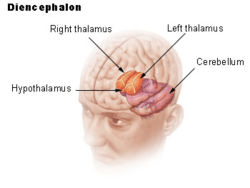
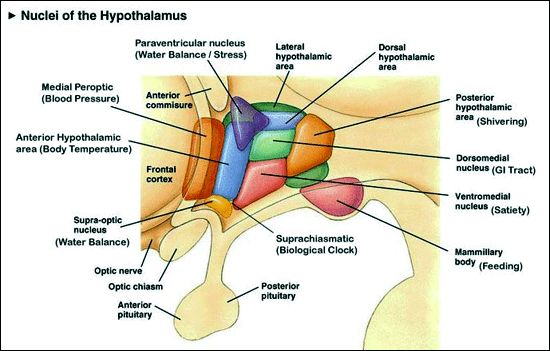
Researchers naturally focus on an organ in the brain called the hypothalamus because it is known to be responsible for gender preference. It is also what is called dimorphic, meaning its structure is different in males and females. There's also differences in the hypothalamus between homosexuals and heterosexuals. Recent studies of the different sections or nuclei have revealed much that was not known before. And there have also been some surprises.
With advances in laboratory technology, a specific region of the hypothalamus, called the sexually dimorphic nucleus (SDN), has been the focus of some interesting research. The SDN is the most conspicuous anatomical male/female difference in the mammalian brain. The nuclei is 3 to 8 times larger in males than in females. Another nuclei of the hypothalamus, IN AH-3, reveals that heterosexual males have double the volume of both homosexual and female subjects.


"As has been reported previously, IN AH 3 was more than twice as large in the heterosexual men as in the women. It was also, however, more than twice as large as in the homosexual men."

A review of current research shows that there is no evidence supporting a social cause for homosexuality [8, 9]. On the contrary, there are multiple studies, both with animals and humans, demonstrating the causative relationship with the pre-natal testosterone during a critical stage in "defeminization".
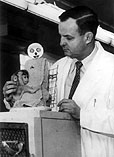
Dr. Harry Harlow's famous studies with Rhesus monkeys [5] demonstrated that such things as love and the ability to nurture healthy children was a learned skill that could be altered by after birth experiences. This non-biologic effect may play a role in female homosexuality and may also be a contributing factor in the degree to which congenital homosexuality is either expressed or repressed. But they do not cause homosexuality.

How Do Brains Get Gender?
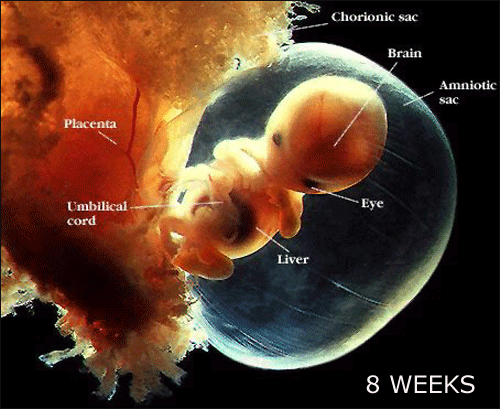
Embryology teaches that early embryos all start out as female. At some point in early gestation, if the chromosomes destine the fetus to be male, the embryo is altered by the genetically programmed addition of certain hormones, called androgen's. These androgen's, especially testosterone, instruct the embryo to develop male characteristics. In their absence, the embryo continues to develop into a female.
An "XX" pair of chromosomes will yield a female; an "XY" pair will result in a male. The "X" is always contributed from the mother (since she has only "X's"), but the father can contribute either an "X" or a "Y"-- so it is the father's genetic contribution that determines the gender of the child. If homosexual men have "XY" pairs which are typically male in all respects, what makes their hypothalamus different?


In a paper published almost a quarter of a century ago, a research psychologist at Villa nova University was also puzzled about gender. Dr. Inge bog Ward was studying the sexual behavior of rats, years before the role of the hypothalamus was even suspected of gendering human brains. [6]
Dr. Ward divided some pregnant rats into three groups. Suspecting that something special might be happening in the early stages of pregnancy, she subjected the first group to stress during the first ten days of gestation by irritating the mother rats to bright lights, noise and annoying vibrations. Ten days in a rat's pregnancy corresponds to the first trimester (3 months) of a human pregnancy. The second group was subjected to stress towards the end of their pregnancy, just before birth. The third group was comprised of male offspring from both prenatal stressed mothers and unstressed mothers. These babies were subjected to the same stress producing stimuli.
Dr. Ward then allowed all the males to grow to adulthood without further interference. She then placed each group of males in cages with healthy females to observe their ability and desire to mate with normal adult females. Here is what happened:

"Abstract: Male rats were exposed to prenatal (i.e. before they were born) or postnatal (after they were born) stress, or both. The prenatally stressed males showed low levels of male copulatory behavior and high rates of female lordotic responding (i.e. "lordotic" refers to mounting behavior which usually occurs during mating). Postnatal stress had no effect. The modifications are attributed to stress-mediated alterations in the ratio of adrenal to gonadal androgen's during critical stages of sexual differentiation. Specifically, it appears that stress causes an increase in the weak adrenal androgen, androstendione, from the maternal fetal adrenal cortices, or both, and a concurrent decrease in the potent gonadal androgen, testosterone." [6]

If the baby carries "XY" chromosomes and is destined to become a male, testosterone needs to activate the newly forming hypothalamus. This is the first known critical phase of "defeminization" when something can go awry, upsetting the master plan.[10]
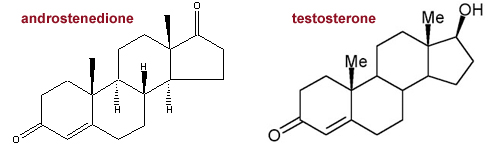
If a mother is stressed during the early stages of pregnancy, she will release an adrenaline related hormone into her shared bloodstream with her unborn baby. This hormone, called androstendione, is structurally similar to testosterone, the male hormone. Both are androgens, but testosterone is more than twenty times as potent as androstendione.
It has also recently been suggested that testosterone actually breaks down to estradiol in some way that androstendione may not [12, 15], further implicating this androgen in disrupting the process of early brain development.

Because the stress hormone seems to mimic testosterone, there is the delay or blockage of the effectiveness of testosterone, even if it is plentiful. This causes a disturbance in the "defeminization" of the hypothalamus .


In 1972, Dr. Ward had no idea that androstendione in male pregnancies would prevent or inhibit the hypothalamus to develop into a healthy male brain, but this stress-related hormone now appears to do just that. The brain makes its gender commitment very early in development and, once committed to either male or female, it can not change.
The interference with environmental testosterone in the later stages of pregnancy does little or nothing to inhibit gender development of the body. By mid-pregnancy, the gonads can produce enough systemic testosterone to develop the body along male plans; however, problems do happen in these later stages  . Sometimes the receptors which receive testosterone are defective or greatly reduced in number. This is generally seen as a defect resulting from the initial blocking of testosterone by the presence of other androgen's . This can inhibit the effectiveness of testosterone and cause a less effective defeminization.
In Doctor Ward's own words:

"...The present data support the hypothesis that exposure of pregnant rats to environmental stressors modifies the normal process of sexual behavior differentiation in male fetuses by decreasing functional testosterone and elevating androstenedione levels during prenatal development. During stress conditions plasma testosterone emanating from the gonads decreases while adrenal androstenedione rises. The molecular structure of the two androgen's, being very similar, it is postulated that the two hormones compete for the same receptor sites. Since androstenedione is a less potent androgen than testosterone, the decrease in male copulatory ability and increased lordotic potential seen in the prenatally stressed animals of the present study would be expected. The relative difference in potency between testosterone and androstendione has been repeatedly demonstrated.

But Why?
As we begin to understand that homosexuality is not inherited, we note that it occurs in more or less the same frequency of the population. This could suggest that a preference for one's own gender served some evolutionary benefit. If not, we should expect the perceived vulnerability of the developing fetal brain to have been corrected. But what could the benefit be?
Again, in Doctor Ward's own words:

"The resulting alterations in sexual behavior provide the basis for an effective population control mechanism, since offspring so affected would not possess the behavioral repertoire necessary to contribute to population growth. Thus, the environment, by triggering an adrenal stress response, may control the reproductive capacity of successive generations of differentiating fetuses and, thereby, population size. "

[Some more recent explanations from Science Daily  article can be found at the bottom of this page.]

What about Lesbians?
The developing female fetus is expecting no pre-natal testosterone. This molecule is significant only if the fetus is destined to be male. Androstenedione, produced by maternal stress, closely resembles testosterone. Even a small amount of this molecule during the critical first trimester of pregnancy could be enough to make the developing hypothalamus defeminized or masculine. So the same mechanism can possibly explain both male and female homosexuality.
Now what?
I approached some homosexual blogs before posting this article on view zone. I summarized the facts and asked for their replies. Some were critical of calling their gender preference a "condition" and thought that implied a defect. Others reminded me that even the anti-discrimination laws often only include protection against discrimination based on sex (meaning male of female) and that being recognized as a congenital phenomenon would only be protected if (a) it was considered a "disability" or (b) homosexuality would be covered under sex discrimination (meaning that a third gender would have to be added). In short, there was a kind of apathy.
What do you think about this?
Notes:
[1] Swaab, DF, Hofman, MA, "Sexual differentiation of the human hypothalamus in relation to gender and sexual orientation", Trends Neuroscience 1995 June, 18(6): 264-70.

[2] NORMAN GESCHWIND, PETER BEHANI!,Left-handedness: Association with immune disease, migraine, and developmental learning disorder,Proc. Nati Acad. Sci. USA, Vol. 79, pp. 5097-5100, August 1982
[3] Exp Clin Endocrinol. 1983 Jan;81(1):83-7. Stressful events in prenatal life of bi- and homosexual men. Dorner G, Schenk B, Schmiedel B, Ahrens L.
[4] S. LaVay, "A difference in hypothalamic structure between heterosexual and homosexual men", Science 30 August 1991, Vol. 253 no.5023 pp 1034-1037
[5] http://www.conservapedia.com/Causes_of_Homosexuality
[6] "Parental Stress Feminizes and Demasculizes the Behavior of Males", Science, January 7, 1972 (83-84).
[7] Swaab DF, Chung WC, Kruijver FP, Hofman MA, Ishunina TA., "Sexual differentiation of the human hypothalamus", Adv Exp Med Biology, 2002;511:75-100; discussion 100-5
[8] Dohler, KD, "The pre- and postnatal influence of hormones and neurotransmitters on sexual differentiation of the mammalian hypothalamus", Int Rev Cytology, 1991;131:1-57.
[9] Savic I, Garcia-Falgueras A, Swaab DF., "Sexual differentiation of the human brain in relation to gender identity and sexual orientation", Prog Brain Res., 2010;186:41-62.
[10] Kula K, Słowikowska-Hilczer J., "Sexual differentiation of the human brain", Przegl Lek. 2000;57(1):41-4.
[11] Bradley SJ, Oliver GD, Chernick AB, Zucker KJ., "Experiment of nurture: ablatio penis at 2 months, sex reassignment at 7 months, and a psychosexual follow-up in young adulthood", Pediatrics,1998 Jul;102(1):e9.
[12] Wu MV, Manoli DS, Fraser EJ, Coats JK, Tollkuhn J, Honda S, Harada N, Shah NM., "Estrogen masculinizes neural pathways and sex-specific behaviors", Cell, 2009 Oct 2;139(1):61-72.
[13] Balthazart J, Tlemçani O, Ball GF., "Do sex differences in the brain explain sex differences in the hormonal induction of reproductive behavior? What 25 years of research on the Japanese quail tells us", Horm Behav. 1996 Dec;30(4):627-61.
[14] Wallen K., "The Organizational Hypothesis: Reflections on the 50th anniversary of the publication of Phoenix, Goy, Gerall, and Young (1959)", Horm Behav. 2009 May;55(5):561-5.
[15] W.J. Friedman, B.S. McEwen, C.D. Toran-Allerand and J.L. Gerlach, "Perinatal development of hypothalamic and cortical estrogen receptors in mouse brain: Methodological aspects", Accepted 14 June 1983. Available online 11 March 2003.


Some interesting facts & further reading about homosexuality:


  • In heterosexual women, the index and ring fingers are usually about the same length. In heterosexual men, the index finger is shorter, on average, than the ring finger. It's one of several differences between the sexes that seem to be set before birth, based on testosterone exposure.
  • Every older brother a man has increases his chances of being gay. A man with four older brothers is three times more likely to be gay than a man with none. (Blanchard)
  • Lesbians' finger lengths were, on average, more like men's. The same holds true for other traits, like eye-blink patterns and inner-ear function.(Breedlove)
  • 75 percent of young boys who dress up like girls, play with dolls and consistently choose stereotypical female pursuits will grow up to be gay. A similar, though less pronounced, pattern is found in girls who prefer trucks over tea sets.
  • Mothers and aunts of gay men had more offspring than female relatives of heterosexuals.
  • In animal studies, about 8 percent of rams never father offspring because they only have eyes for other males. Australian sheepherders call them "shy breeders." (Roselli).
Some primate work has been done at the University of Wisconsin's Harlow Primate Research Center on the effects of stress and the importance of maternal care on the sexual behavior of monkeys; however, much of this work measured post-natal nurturing and was not experimentally designed to assess homosexual behavior. A review of this work suggest that the expression of healthy sexual behavior and successful knowledge of mating can be environmentally inhibited by the lack of parental nurturing. This work indicates a potential source of aberrant sexual behavior and dysfunction rather than simple homosexuality.

Currently, Dr. Simon LeVay, a neurobiologist at California's Salk Institute and founder of the Center for Gay and Lesbian Studies in Santa Monica, California, has been the most vocal proponent for some type of gendered brain influence on homosexuality but his work has unfortunately remained unreviewed by many professionals.
Some of LeVay's works are listed here for recommended reading:
Albrick's Gold - New York: Richard Kasak Books, 1997.
Queer Science - Cambridge: MIT Press, 1996.
City of Friends - Cambridge Press, 1995.
The Sexual Brain - Cambridge: MIT Press, 1993.


Are Lesbian Brains Different?
Study Suggests Difference in Lesbians' Brains
From Dr. Alan Cantwell, MD
alancantwell@sbcglobal.net

WASHINGTON (AP) - Lesbians' brains react differently to sex hormones than those of heterosexual women, new research indicates.
That's in line with an earlier study that had indicated gay men's brain responses were different from straight men - though the difference for men was more pronounced than has now been found in women.
Lesbians' brains reacted somewhat, though not completely, like those of heterosexual men, a team of Swedish researchers said in Tuesday's edition of Proceedings of the National Academy of Sciences.
A year ago, the same group reported findings for gay men that showed their brain response to hormones was similar to that of heterosexual women.
In both cases the findings add weight to the idea that homosexuality has a physical basis and is not learned behavior.
"It shows sexual orientation may very well have a different basis between men and women ... this is not just a mirror image situation," said Sandra Witelson, an expert on brain anatomy and sexual orientation at the Michael G. DeGroote School of Medicine at McMaster University in Hamilton, Ontario.
"The important thing is to be open to the likely situation that there are biological factors that contribute to sexual orientation," added Witelson, who was not part of the research team.
The research team led by Ivanka Savic at the Stockholm Brain Institute had volunteers sniff chemicals derived from male and female sex hormones. These chemicals are thought to be pheromones - molecules known to trigger responses such as defense and sex in many animals.
Whether humans respond to pheromones has been debated, although in 2000 American researchers reported finding a gene that they believe directs a human pheromone receptor in the nose.
The same team reported last year on a comparison of the response of male homosexuals to heterosexual men and women. They found that the brains of gay men reacted more like those of women than of straight men.
The new study shows a similar, but weaker, relationship between the response of lesbians and straight men.
Heterosexual women found the male and female pheromones about equally pleasant, while straight men and lesbians liked the female pheromone more than the male one. Men and lesbians also found the male hormone more irritating than the female one, while straight women were more likely to be irritated by the female hormone than the male one.
All three groups rated the male hormone more familiar than the female one. Straight women found both hormones about equal in intensity, while lesbians and straight men found the male hormone more intense than the female one.
The brains of all three groups were scanned when sniffing male and female hormones and a set of four ordinary odors. Ordinary odors were processed in the brain circuits associated with smell in all the volunteers.
In heterosexual males the male hormone was processed in the scent area but the female hormone was processed in the hypothalamus, which is related to sexual stimulation. In straight women the sexual area of the brain responded to the male hormone while the female hormone was perceived by the scent area.
In lesbians, both male and female hormones were processed the same, in the basic odor processing circuits, Savic and her team reported.
Each of the three groups of subjects included 12 healthy, unmedicated, right-handed and HIV-negative individuals.
The research was funded by the Swedish Medical Research Council, Karolinska Institute and the Wallenberg Foundation.
Copyright 2006 The Associated Press.
Alan Cantwell M.D.
alancantwell@sbcglobal.net
http://www.ariesrisingpress.com
FOUR WOMEN AGAINST CANCER


ScienceDaily (Oct. 26, 2009) -- Prenatal sex-based biological differences extend to genetic expression in cerebral cortices. The differences in question are probably associated with later divergences in how our brains develop. This is shown by a new study by Uppsala University researchers Elena Jazin and Bjorn Reinius, which has been published in the latest issue of the journal Molecular Psychiatry.
Professor Elena Jazin and doctoral student Bjorn Reinius at the Department of Physiology and Developmental Biology previously demonstrated that genetic expression in the cerebral cortices of human beings and other primates exhibits certain sex-based differences. It is presumed that these differences are very old and have survived the evolutionary process. The purpose of the new study was to determine whether they appear during the process of brain development or first upon the conclusion of that process. Identifying the initial genetic mechanisms that prompt the brain to develop in a female or male direction is a long-range research objective.
The Uppsala University researchers analysed data, on the basis of sex, from another extensive study of the prenatal human brain.
"The results show that many of the genes situated on the Y chromosome are expressed in various parts of the brain prior to birth and probably provide a developmental basis for the sex-based differences exhibited by adult brains," according to Elena Jazin.
More than a third of Y-chromosomal genes appear to be involved in sex-based human brain differentiation. Some of the genetic activity in question is evident in the adult brain, while other of it only appears at earlier stages of brain development. It is yet unknown whether the differences in genetic expression among female and male brains have any functional significance.
"The findings are consistent with other factors, such as environment, also playing a role in how we develop," emphasizes Elena Jazin.
Knowledge of the development of sex-based brain differences is of potential significance for the treatment of brain disturbances and diseases. A large number of psychiatric illnesses, including depression and autism, affect men and women differentially.
"Taking account of sex-based differences is crucial to the study of normal and abnormal brain activity," according to Elena Jazin.


Article in Science Daily: 
February 2010: Potential Evolutionary Role for Same-Sex Attraction

Male homosexuality doesn't make complete sense from an evolutionary point of view. It appears that the trait is heritable, but because homosexual men are much less likely to produce offspring than heterosexual men, shouldn't the genes for this trait have been extinguished long ago? What value could this sexual orientation have, that it has persisted for eons even without any discernible reproductive advantage?
One possible explanation is what evolutionary psychologists call the "kin selection hypothesis." What that means is that homosexuality may convey an indirect benefit by enhancing the survival prospects of close relatives. Specifically, the theory holds that homosexual men might enhance their own genetic prospects by being "helpers in the nest." By acting altruistically toward nieces and nephews, homosexual men would perpetuate the family genes, including some of their own.
Two evolutionary psychologists, Paul Vasey and Doug VanderLaan of the University of Lethbridge, Canada tested this idea for the past several years on the Pacific island of Samoa. They chose Samoa because males who prefer men as sexual partners are widely recognized and accepted there as a distinct gender category -- called fa'afafine -- neither man nor woman [right]. The fa'afafine tend to be effeminate, and exclusively attracted to adult men as sexual partners. This clear demarcation makes it easier to identify a sample for study.
Past research has shown that the fa'afafine are much more altruistically inclined toward their nieces and nephews than either Samoan women or heterosexual men. They are willing to babysit a lot, tutor their nieces and nephews in art and music, and help out financially -- paying for medical care and education and so forth. In a new study, the scientists set out to unravel the psychology of the fa'afafine, to see if their altruism is targeted specifically at kin rather than kids in general.
They recruited a large sample of fa'afafine, and comparable samples of women and heterosexual men. They gave them all a series of questionnaires, measuring their willingness to help their nieces and nephews in various ways -- caretaking, gifts, teaching -- and also their willingness to do these things for other, unrelated kids. The findings, reported on-line this week in the journal Psychological Science, lend strong support to the kin selection idea. Compared to Samoan women and heterosexual men, the fa'afafine showed a much weaker link between their avuncular -- or uncle like -- behavior and their altruism toward kids generally. This cognitive dissociation, the scientists argue, allows the fa'afafine to allocate their resources more efficiently and precisely to their kin -- and thus enhance their own evolutionary prospects.
To compensate for being childless, each fa'afafine would have to somehow support the survival of two additional nieces or nephews who would otherwise not have existed. "If kin selection is the sole mechanism by which genes for male same-sex sexual attraction are maintained over time," the fa'afafine must be "super uncles" to earn their evolutionary keep, explains Vasey. Consequently, Vasey suggests "that the fa'afafine's avuncularity probably contributes to the evolutionary survival of genes for male same-sex sexual attraction, but is unlikely to entirely offset the costs of not reproducing."
Do these findings have any meaning outside of Samoa? Yes and no. Samoan culture is very different from most Western cultures. Samoan culture is very localized, and centered on tight-knit extended families, whereas Western societies tend to be highly individualistic and homophobic. Families are also much more geographically dispersed in Western cultures, diminishing the role that bachelor uncles can play in the extended family, even if they choose to. But in this sense, the researchers say, Samoa's communitarian culture may be more -- not less -- representative of the environment in which male same-sex sexuality evolved eons ago. In that sense, it's not the bachelor uncle who is poorly adapted to the world, but rather the modern Western world that has evolved into an unwelcoming place.


New Primate Studies!--Androgen's cause brain gender--A must read.


NEWS...
Friday, June 5, 2009

Brains of gay men show similarities to those of heterosexual women, study reports The brains of gay men resemble those of straight women, according to research being published Tuesday that provides more evidence of the role of biology in sexual orientation.

Using brain scanning equipment, researchers said they discovered similarities in the brain circuits that deal with language, perhaps explaining why homosexual men tend to outperform straight men on verbal skills tests -- as do heterosexual women.
The area of the brain that processes emotions also looked very much the same in gay men and straight women -- and both groups have higher rates of depressive disorders than heterosexual men, researchers said.

The study in Proceedings of the National Academy of Sciences, however, found the brain similarities were not as close in the case of gay women and straight men.
Previous studies have found evidence that sexual orientation is hard-wired. More than a decade ago, neurobiologist Simon LeVay reported that a key area of the hypothalamus, a brain structure linked to sexual behavior, was smaller in homosexual men compared to heterosexual men.
The latest study, led by Ivanka Savic of the Karolinska Institute in Stockholm, was significant in that it looked at areas of the brain that have nothing to do with sexual behavior, suggesting there was a basic biological link between sexual orientation and a range of brain functions.
"The question is -- how far does it go?" said Dr. Eric Vilain, who studies human sexual development at UCLA and was not involved in the study. "In gay men, the brain is feminized. Is that limited to particular areas or is the entire brain female-like?"
Vilain said his hunch was the entire brain was not feminized because "gay men have a number of masculine traits that are not present in women."
Savic and colleagues used magnetic resonance imaging to measure brain volumes of two groups, each divided evenly between men and women: 50 heterosexuals and 40 homosexuals. They knew going into the study that in men the right cerebral hemisphere is largest but in women the left and right hemispheres are of equal size.

The results showed that gay men had symmetrical brains like those of straight women, and homosexual women had slightly asymmetrical brains like those of heterosexual men. Language circuits are thought to be more symmetrical in straight women than in heterosexual men, the report said.

The differences were pronounced. For example, the right cerebral hemisphere in heterosexual men was 624 cubic centimeters -- 12 greater than their left side. In homosexual men, the right hemisphere was 608 cubic centimeters -- 1 cubic centimeter smaller than the left.
In heterosexual women, there was no volume difference between right and left hemispheres. But in homosexual women, their right hemisphere was 5 cubic centimeters larger than the left.

Next, researchers used positron emission topography to measure blood flow in the amygdala, a brain area involved in processing emotions. The wiring of the amygdala in gay men more closely resembled that of straight women than straight men, researchers said. The amygdala of gay women looked more like those of straight men, according to the report.
Savic said she believed the brain differences were forged in the womb or infancy, probably as a result of genetic or hormonal factors.
She said she could not explain why the differences were more pronounced in homosexual men than in homosexual women.
Marc Breedlove, a neuroscientist who studies sexual development at Michigan State University, said that in his studies with rats, changes in prenatal levels of testosterone caused the sort of brain alterations Savic observed in her study.